



Exploration boost required to meet production goal

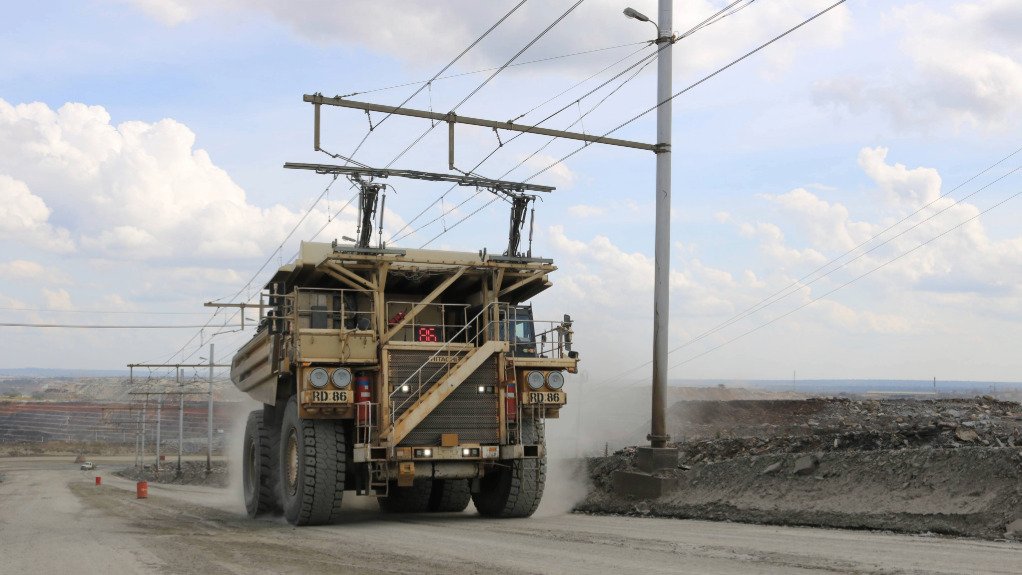
KEEPING THE LIGHTS ON During the drought impacts on Zambia's hydropower generation, the country has became significantly active in the Southern African Power Pool, enabling mines to sustain supply and maintain production growth
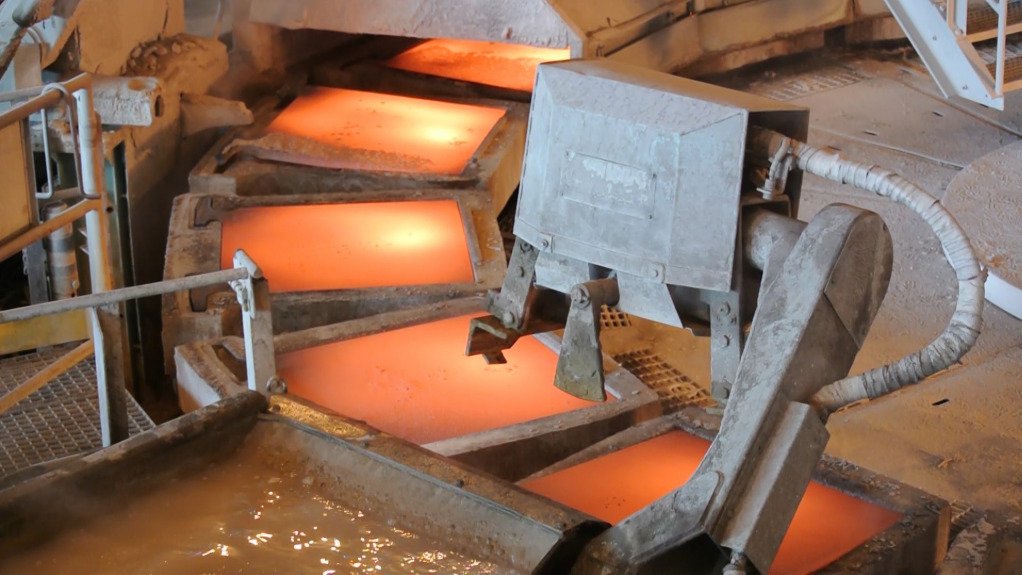
INCREASED ACTIVITY Through an expanding project pipeline and improved turnaround at existing operations, Zambia is inching closer to its three-million tonnes of copper production goal


While Zambia’s mining sector is becoming significantly more active, with an expanding project pipeline and improved turnaround at existing operations, exploration activity must accelerate significantly to meet the country’s goal of achieving three-million tonnes of copper production by 2031, says industry business association Zambia Chamber of Mines (ZCM) CEO Sokwani Chilembo.
Zambia produced 890 000 t of copper in 2025, largely driven by expansions by mining companies within ZCM’s membership, with members averaging about 8% year-on-year growth.
“If that comes on board, then before the close of the decade, the assets we have in hand can take us to 1.6-million tonnes of yearly production,” he says.
However, bridging the remaining gap of 1.4-million tonnes to reach three-million tonnes is contingent on a sustained and well-funded exploration effort, with the ZCM estimating that at least $200-million a year of exploration spend is required to sufficiently scale up copper reserves in line with the production target.
To boost exploration activity, the ZCM is advocating for exploration provisions similar to those Canada has and that South Africa had a few years back, such as Section 12J of the South African Income Tax Act, which served as an exploration flow-through share mechanism whereby institutional investors could have exploration costs assigned to them for income tax purposes by bona fide exploration companies.
“We consider something along these lines to be a necessary precursor to achieve the requisite levels of exploration activity.”
Most exploration licences are held by local parties; therefore, such a provision would enable local explorers to access capital domestically and, subsequently, expedite and partially derisk larger tranches of deposits. These deposits could then be matched with incoming capital, consequently helping Zambia to achieve better leverage and better throughput, adds Chilembo.
He also calls for other measures targeted at facilitating exploration activity, including the removal of import duties on exploration equipment, adjustments to withholding tax levels on geological consulting services brought into the country, and the revision of withholding tax on interest arrangements for investors in the critical minerals sector.
Energy Security
Further down the value chain to production, Chilembo acknowledges that energy is a key constraint, but asserts that Zambia has sufficient domestic resources to support power generation at the level required to meet its 2031 production goal.
Aligned with this, Zambian stakeholders are discussing ways of developing additional hydroelectric generation capacity in collaboration with neighbouring countries.
In terms of relying heavily on hydropower, Chilembo adds that the country has navigated the El Niño-induced drought through innovative policy such as allowing for electricity trading.
During the drought, Zambia became significantly active in the Southern African Power Pool, through which ZCM members were able to sustain supply and maintain production growth during this challenging time.
“Provided we develop the pipeline quickly enough to ensure a steady growth in offtake and maintain policy stability and the country’s competitiveness as an investment destination, we can continue to attract capital from across the world,” he adds.
Legislative Environment
Following a decline in foreign investment in the country’s mining sector, driven by policy instability around windfall taxes during the commodity supercycle, the current administration has provided policy stability, alongside progressive improvements in competitiveness, says Chilembo.
Aligned to this, government has removed import duties on capital equipment and allowed for a more viable environment in which to deploy financing instruments such as streaming agreements and royalty arrangements.
Owing to this improved legislative landscape, investment is no longer from a single source, with investments from companies based in the US, Canada, Australia, the UK, China and the Middle East, with more diversification anticipated, he explains.
Meanwhile, tax institution Zambia Revenue Authority (ZRA) has become increasingly proactive in bringing informal producers into the formal tax ambit, yielding an additional 45 000 t of copper in 2024, which then rose to 77 000 t in 2025.
“If the ZRA and the newly established [mining regulatory body] Minerals Regulation Commission work hand in hand, we should see improved regulatory consistency and compliance across the sector,” says Chilembo.
Combined with policy stability, this is anticipated to reduce the cost of capital and the risk premium associated with investing in Zambia.
In addition, local-content regulations – which came into effect on January 1, 2025, following more than two years of negotiation – are aimed at enhancing participation across the minerals value chain.
Chilembo explains that the local-content compromise reached with government requires mining companies to spend a defined amount yearly in developing local supply chain capacity and establish supplier development programmes, supported by accessible bank finance and business development services.
Here, a core consideration is that regulations should not become a cost burden, but rather a competitive advantage for the nation.
“A strong local supply base is particularly valuable in providing resilience through commodity price troughs, as capital expenditure continues to be deployed, aligned with long-term plans, regardless of shorter-term price volatility,” he adds.
The implementation of local-content regulation requirements is well advanced among several operators, and outsourced options are available to smaller operators that lack the resources to manage such programmes independently.
Article Enquiry
Email Article
Save Article
Feedback
To advertise email advertising@creamermedia.co.za or click here
Research Reports

Projects


Latest Multimedia

Latest News

Showroom
Multotec, recognised industry leaders in metallurgy and process engineering help mining houses across the world process minerals more efficiently,...
VISIT SHOWROOM
Goodwin Submersible Pumps Africa is sole distributors for Goodwin electrically driven, submersible, abrasion resistance slurry pumps.
VISIT SHOWROOM



Press Office
Announcements
What's On
Subscribe to improve your user experience...
Option 1 (equivalent of R125 a month):
Receive a weekly copy of Creamer Media's Engineering News & Mining Weekly magazine
(print copy for those in South Africa and e-magazine for those outside of South Africa)
Receive daily email newsletters
Access to full search results
Access archive of magazine back copies
Access to Projects in Progress
Access to ONE Research Report of your choice in PDF format
Option 2 (equivalent of R375 a month):
All benefits from Option 1
PLUS
Access to Creamer Media's Research Channel Africa for ALL Research Reports, in PDF format, on various industrial and mining sectors
including Electricity; Water; Energy Transition; Hydrogen; Roads, Rail and Ports; Coal; Gold; Platinum; Battery Metals; etc.
Already a subscriber?
Forgotten your password?
Receive weekly copy of Creamer Media's Engineering News & Mining Weekly magazine (print copy for those in South Africa and e-magazine for those outside of South Africa)
➕
Recieve daily email newsletters
➕
Access to full search results
➕
Access archive of magazine back copies
➕
Access to Projects in Progress
➕
Access to ONE Research Report of your choice in PDF format
RESEARCH CHANNEL AFRICA
R4500 (equivalent of R375 a month)
SUBSCRIBEAll benefits from Option 1
➕
Access to Creamer Media's Research Channel Africa for ALL Research Reports on various industrial and mining sectors, in PDF format, including on:
Electricity
➕
Water
➕
Energy Transition
➕
Hydrogen
➕
Roads, Rail and Ports
➕
Coal
➕
Gold
➕
Platinum
➕
Battery Metals
➕
etc.
Receive all benefits from Option 1 or Option 2 delivered to numerous people at your company
➕
Multiple User names and Passwords for simultaneous log-ins
➕
Intranet integration access to all in your organisation
